
How to accomplish goals with action-planning
Smart people often get stuck in an endless cycle of preparation and planning. We research, analyze, and strategize – constantly in motion, but not taking real action. As James Clear, the master of habits, points this out in a post on taking action. Motion makes us feel like we’re progressing, but action is what actually delivers results.
Think about it: reading about workout routines isn’t the same as doing a single push-up. Planning your perfect morning routine isn’t the same as waking up early once. Motion is preparing to take action, but action is the behavior that will actually deliver results.
This is where action planning comes in. It’s not just another planning exercise – it’s about specifying exactly what actions you’ll take, integrating them into a coherent plan, and preparing yourself for execution. Research shows that effective action planning increases your likelihood of achieving goals by boosting your self-efficacy – your belief in your ability to succeed.
The key difference? Action planning focuses on concrete, specific behaviors rather than vague intentions. It transforms abstract goals like “get fit” into specific actions like “do 20 push-ups every morning at 7 AM before breakfast.”
Let’s put this into practice and turn your goals into actual actions you can take today. Download our personal development plan template if you want to follow along with all the exercises. Including all of the other exercise in the personal development plan series!
Create habits, assess your progress, and reach your goals.
A complete workbook with all the exercises in our personal development plan series.
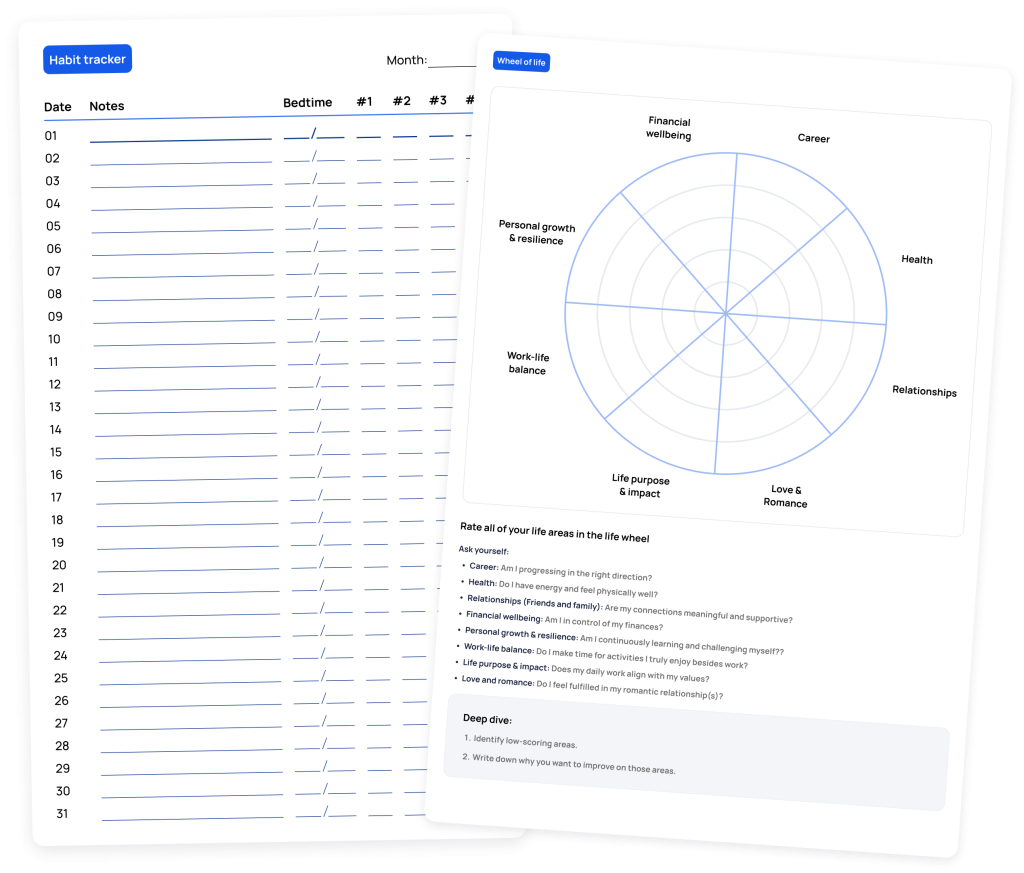
Transform your personal development goals into actions
Now that you understand why action planning is crucial, let’s break down your goal into specific, actionable steps. The key is to be detailed enough that you know exactly what to do, when to do it, and how to measure success.
Creating your actions list
First, write down all the actions you’ll need to take to achieve your goal. Let’s use an example to guide you.
Say your goal is to land a new job as a project manager within 6 months. Your action list might look like this:
- Update your LinkedIn profile
- Revise your resume
- Network with industry professionals
- Practice interview questions
- Apply to relevant job postings
- Learn new project management tools
Exercise 1: Take a moment now to create your own action list. Don’t worry about perfection – we’ll refine these actions in the next exercise.
Adding context to your actions
Here’s where many people go wrong – they create a list of actions but never specify when or where they’ll do them. An action without context is just a wish. Let’s transform each action into a concrete, trackable task.
Using our job-hunting example:
- Instead of: “Network with industry professionals”. Write: “Attend the tech meetup downtown every Tuesday from 6-8 PM”.
- Instead of: “Practice interview questions”. Write: “Answer 3 common interview questions in 10 minutes every Monday at 8 AM in my home office”.
Exercise 2: For each action, specify:
- When will you do it? (Day and time)
- Where will you do it? (Location)
- How will you measure completion? (Time spent, specific outcome, etc.)
- What resources do you need? (Tools, materials, etc.)
This level of detail might seem excessive, but it eliminates the guesswork that often leads to procrastination. When you know exactly what needs to be done, when, and where, you’re much more likely to follow through.
Take your action list from Exercise 1 and add this specific context to each item. Remember, every action should be concrete enough that you know when to check it off as complete.
How to create a habit: turning actions into habits
After the last two exercises you should have a rough idea of what you have to do to accomplish your goal. The next step is to create structure and a clear roadmap that turn you actions into habits.
If your goal is to run a marathon, you need to do running and strength training sessions. These are your actions. However, to make sure you’ll be ready for a marathon in 6 months, you need a structured training scheme.
Sounds logical, right? When approaching your personal development goals, we want to implement the same logic. You’ve already figured out what actions you need to take and now you need a structured training plan to accomplish your goals.
Here’s why this matters: One-off actions create temporary progress, but habits create lasting change. Just like a marathon runner doesn’t become race-ready through random runs, you won’t achieve your big goals through scattered efforts. You need a system that progressively makes you better.
The good news? You’ve already done the hardest part by defining your specific actions with context. Now we’re going to organize these actions into a simple but powerful habit tracking system that will help you:
- Stay consistent with your actions
- Monitor your progress
- Build momentum over time
- Actually see if you’re moving toward your goal
Ready to create your habit tracking system? Let’s dive into the next exercise.
Why a habit tracker matters
Here’s why tracking matters: If you’re feeling stuck or not making progress, there’s usually a simple reason – you haven’t been taking the actions you committed to. Your habit tracker makes this crystal clear. No more fooling yourself with “I think I’m doing okay” when you’re actually skipping most of your planned actions.
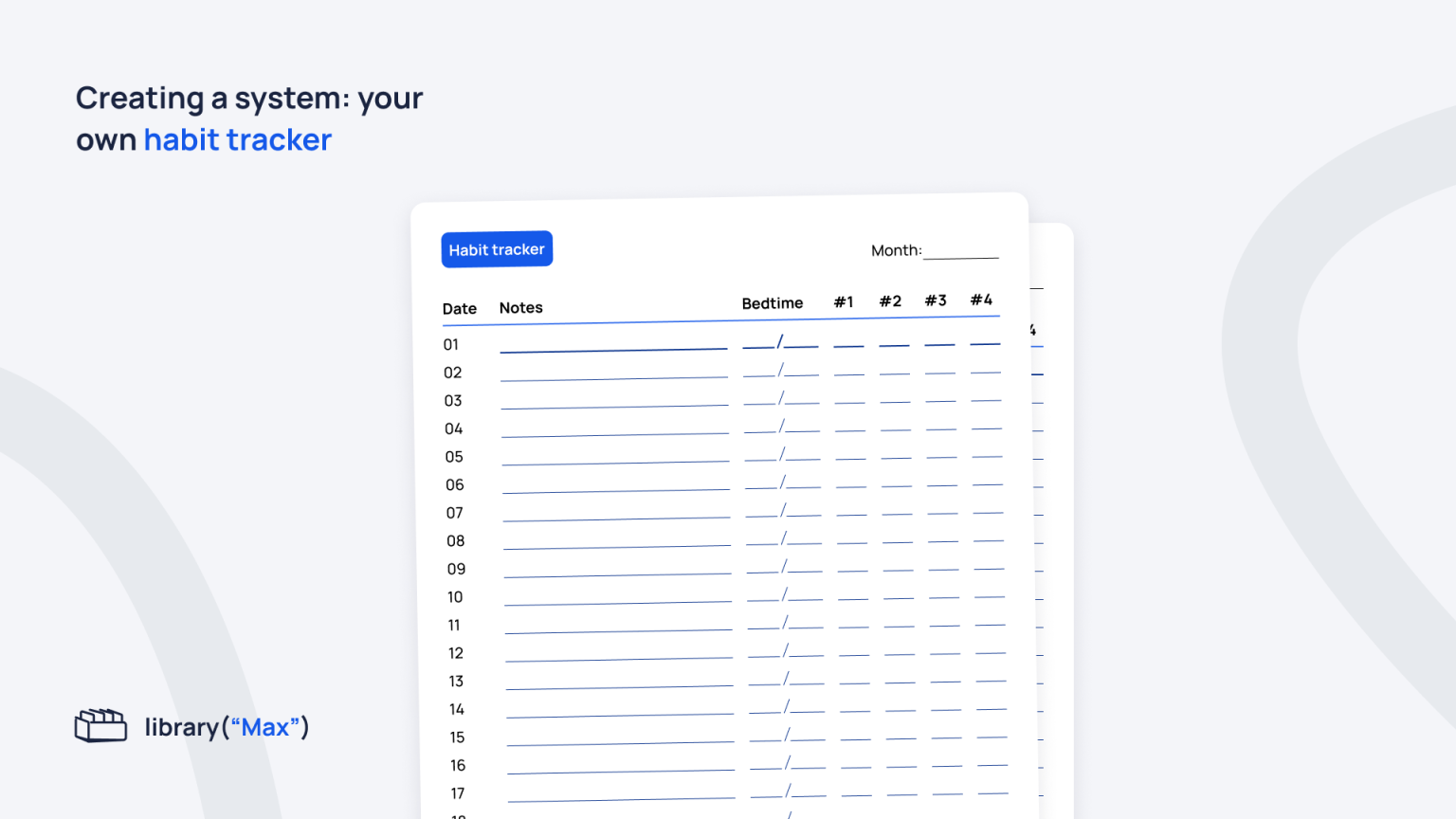
Creating a system: your own habit tracker
Now comes the crucial part: creating a system to track your actions. This isn’t just about checking boxes – it’s about being honest with yourself and seeing what you’re actually doing versus what you planned to do.
Setting up your habit tracker
Grab your personal development template and write down what you want to achieve. Don’t worry about making it perfect – just get it on paper.
Exercise 3: Take your list of actions with their specific contexts and put them into a simple habit tracker. This can be as basic as a calendar or a simple checklist that you can track every day. The key is being able to track whether you’re following through on your commitments.
You’ll find a habit tracker in our personal development plan template! But a bullet journal or Excel sheet would do the job too. You can also watch this simple yet effective video on how to create your own habit tracker.
The #1 rule for habits: keep it stupid simple
Here’s the biggest mistake people make with habit tracking: They try to change everything at once. Let me share a hard truth I’ve learned from working with hundreds of people on their goals.
Your enthusiasm for change is both your greatest asset and your biggest trap.
Think about working out. The typical pattern goes like this:
- You get motivated to get in shape
- You commit to working out 4 times a week
- You go strong for one week
- Life gets in the way
- Four weeks later, you’re angry at yourself for “failing” again
Instead, here’s what actually works:
- Start with just ONE or TWO workouts per week
- Yes, this will feel too easy
- Yes, you’ll want to do more
- Resist that urge
- Stick with it for a month
- Only then consider adding more
This same principle applies to any habit:
- Want to start blogging? Write once a week for 2-3 hours
- Learning a new skill? Practice twice a week for 1 hour
- Building a business? Set aside one evening a week
Trust the process to be consistent
Here’s the magical part: When you keep it simple and actually stick to your small commitment, something incredible happens. That simple action becomes a habit. It becomes part of who you are and what you do.
Remember: It’s better to do two workouts consistently for six months than to do four workouts for one week and quit. Your habit tracker will help you see this progress and keep you honest about your consistency.
Adding subgoals to your habit tracker
Consistent action is great, but how do you know if those actions are actually moving you towards your goal? This is where subgoals come in. Think of them as milestones that help you stay on track and measure real progress.
Creating progress-focused subgoals
Let’s make this concrete with our example: our goal is to find a new job as a project manager in a tech company by the end of summer. You’ve already committed to spending two hours every Thursday evening on your job search (great habit!). Now, let’s add subgoals to ensure those two hours actually lead somewhere.
Example subgoals could be:
- Creating your CV
- Creating a standard template for your motivation letter
- Applying to 5 vacancies that interest you
- Completing your first job interview
Exercise 4: Create a list with subgoals that you can add to your habit tracker once you reach them.
With this strategy you’ll know if you are actually making progress. Ticking subgoals off every once in a while? Great! If not, reflect on what you’re doing wrong. In the next blogpost in this series we’ll dive deeper into how to reflect on your progress and beat procrastination.
The key is making these subgoals concrete and completable. You should be able to clearly say “yes, this is done” or “no, not yet.”
Making your subgoals work
Here are some crucial tips for setting effective subgoals:
- Create a rough order: While you might want to complete your CV before applying to jobs, don’t be too rigid. If a perfect opportunity comes up, be ready to adapt your order.
- Avoid perfectionism: Don’t get stuck endlessly polishing your CV. Create a “good enough” version 1.0 and move forward. You can always improve it later.
- Stay honest about progress: If you’re spending hours rewriting your CV or endlessly browsing job listings without applying, you’re in motion but not making progress. Use your subgoals to stay focused on outcomes.
- Keep them flexible: As you progress, you might discover new necessary subgoals. For example, after a few interviews, you might add “Practice technical interview questions” as a new subgoal. That’s perfectly fine – your subgoals can evolve as you learn more.
The point of subgoals is to ensure your consistent actions (habits) lead to actual progress. They help you avoid the trap of being busy without moving forward.
What else do you need to accomplish your goals?
You’ve now got everything you need to turn your goals into actions and build lasting habits. Let’s summarize what you’ve done:
- Made a clear action plan context around your actions
- Created a simple habit tracking system
- Added concrete subgoals to measure progress
But let’s be honest – knowing what to do is the easy part. The real challenge comes when motivation fades, obstacles appear, and procrastination kicks in. These are normal parts of any personal development journey and exactly what we’ll tackle in our next blogpost on self-reflection, beating procrastination, and making progress.
We’ll dive deep into:
- Why we procrastinate (especially on important goals)
- How to recognize when you’re avoiding action
- Practical strategies to push through resistance
- Ways to adjust your approach when things get tough
- Methods to reflect and learn from setbacks
Because here’s the truth: The first two weeks of any new habit are relatively easy – you’re motivated and excited. But what separates those who achieve their goals from those who don’t is their ability to keep going for the next 20 weeks and beyond.
Create habits, assess your progress, and reach your goals.
A complete workbook with all the exercises in our personal development plan series.