
A quick overview of our personal development plan series
Part 1: Introduction and self-assessment (You are here)
Part 2: Choosing your personal development goals
Part 3: How to be consistent: Turning goals into actions and habits
Part 4: Self-reflection exercises: beat procrastination and make progress
Why should you focus on your personal development
We all carry dreams within us. Maybe you want to start your own business, become an expert in your field, or master a new skill that excites you. These aspirations are more than just daydreams – they’re glimpses of your potential.
Consider these common goals:
- Building a successful startup while working a full-time job
- Becoming a recognized expert in your industry by age 30
- Learning to code and switching careers without going back to college
Traditional education gives you the basics. But personal development? That’s your secret weapon. It’s what helps you develop the mindset, habits, and skills you need to achieve goals that seem out of reach. While others wait for opportunities, you’ll be creating them.
Here’s why this matters: The world is changing faster than ever. The skills that set you apart today might be basic requirements tomorrow. Personal development isn’t just about self-improvement and skills – it’s about humility, perseverance and being open to learn.
Using a personal development plan for continious self-improvement
Below, you can watch a TED Talk by Angela Duckworth: “Grit: The Power of Passion and Perseverance”. She explains how continuous self-improvement, not just natural talent, leads to extraordinary achievements. It’s a powerful reminder that investing in yourself is the best bet you can make. Ready to take your first step? Let’s start with understanding exactly where you are right now!
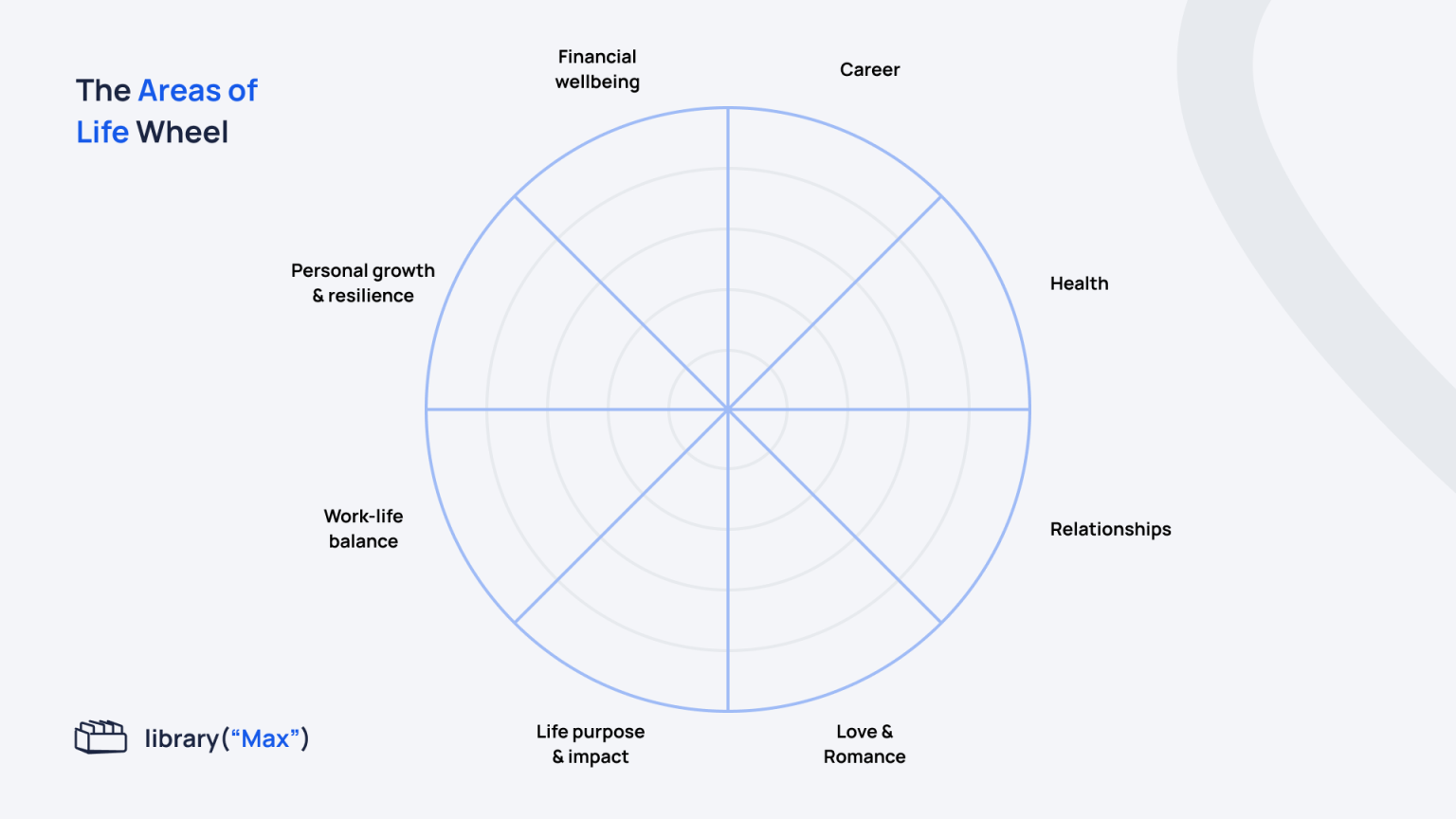
Self-Assessment: how do you rate different areas in your life?
The Areas of Life Wheel is a powerful visualization tool that reveals imbalances and opportunities in your life. Think of it as a snapshot of your current situation – essential for making informed decisions about where to focus your development efforts.
To make this easier, we created a downloadable personal development plan template. Starting with the areas of life wheel worksheet. After you download it, start straight away with the first exercise!
How to complete your assessment:
Score each area from 1-10
- 1 = Completely unsatisfied
- 5 = Somewhat satisfied
- 10 = Extremely satisfied
Be honest – this is for your growth. Ask yourself:
- Career: Am I progressing in the right direction?
- Health: Do I have energy and feel physically well?
- Relationships (Friends and family): Are my connections meaningful and supportive?
- Financial wellbeing: Am I in control of my finances?
- Personal growth & resilience: Am I continuously learning and challenging myself??
- Work-life balance: Do I make time for activities I truly enjoy besides work?
- Life purpose & impact: Does my daily work align with my values?
- Love and romance: Do I feel fulfilled in my romantic relationship(s)?
This selection of areas balances professional development with personal wellbeing, matching our focus on actionable growth and a holistic personal development.
Why your self-assessment matters for your personal development plan
Without knowing where you stand, it’s hard to know what improvements are going to impact your life the most. Energy spend on things should quickly turn into real noticable results. Otherwise, you’ll lose your motivation. In addition, the wheel reveals patterns. You might discover that low energy (Health) is impacting your career growth, or strong relationships are supporting your mental Health.
These insights help you:
- Choose high-impact goals
- Identify ripple effects
- Track progress over time
Create habits, assess your progress, and reach your goals.
A complete workbook with all the exercises in our personal development plan series.
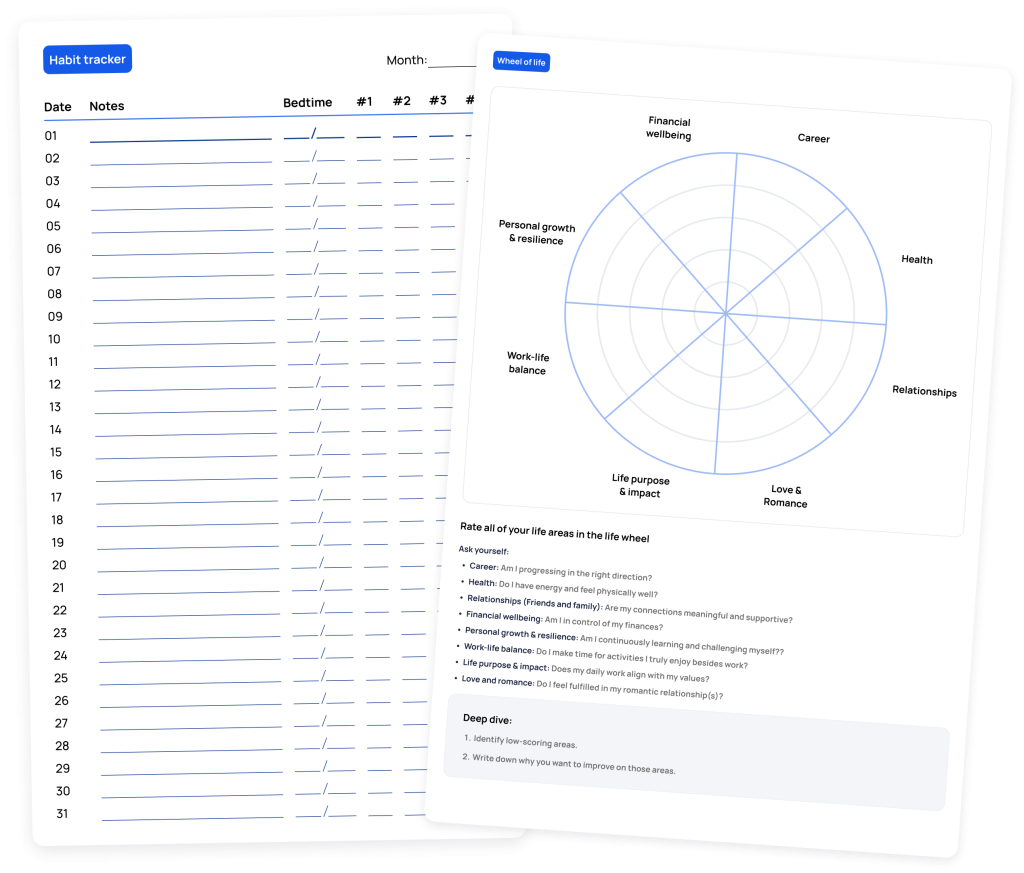
What to expect in your personal growth journey?
You’ve just mapped your life wheel, and you’re probably eager to fill those gaps. Let’s set realistic expectations about what’s ahead.
Timeline & milestones
The first changes often appear within 30 days:
- Better awareness of your habits and patterns
- Small wins in your lowest-scoring areas
- Increased energy as you take control
By 90 days, expect:
- New habits becoming automatic
- Visible progress in 2-3 life wheel areas
- Friends noticing changes in your behavior
Common challenges (and solutions)
Your personal development journey is never without it’s challenges. This is what we often see:
- Initial overwhelm: Looking at your life wheel might feel daunting. Solution: We’ll break everything into small, manageable steps.
- Progress plateaus: Around month 2-3, growth might slow. Solution: Our tracking methods will help you spot and push through these phases.
- Life gets busy: Your lowest-scoring areas might slip again. Solution: You’ll learn to build systems that work even on your busiest days.
A real example
Meet Tom, who scored 3/10 in “Health & Fitness.” Instead of attempting a complete lifestyle overhaul, he started with a 10-minute morning workout 2 times a week. Within three months, his energy improved, affecting his career performance. His health score rose to 6/10, and his career score followed.
Remember: Personal development is a marathon, not a sprint. Every small improvement on your life wheel compounds over time.
Ready to map out your first steps?
You started your personal development plan: what's next?
You’ve assessed where you are. You understand what to expect. Now it’s time for action. In our next post, we’ll transform your life wheel insights into concrete goals.
You’ll learn:
- How to choose goals that create momentum
- The exact framework for making goals achievable
- Why most people set the wrong goals (and how to avoid it)
But before we get into your goals, one more thing.
Why does personal development matter to you?
One last exercise before we move one! Consider the following questions:
- What drives you to be better?
- What must you do that requires growth?
Take a look at your life wheel:
- Circle your lowest-scoring area(s)
- Write one or two sentences about why improving this area matters to you
If you’re done, move on to part two: Choosing your personal development goals.
Choosing your personal development goals